The Federal Deposit Insurance Corporation (FDIC) is planning to convene a board meeting on April 7, 2026, marking a major milestone in the rollout of the GENIUS Act. The meeting is supposed to discuss key rules for bank-issued stablecoins under the crypto bill. Ad Ad FDIC to Discuss Key GENIUS Act Stablecoin Rules Next Week
Crypto exchange Coinbase’s latest acquisition of conditional approval from the Office of the Comptroller of the Currency (OCC) to establish a national trust bank is now facing backlash. US community banks are pushing back against the move, citing potential risks to consumers and the financial system. Ad Ad US Banks Push Back Against Coinbase’s National
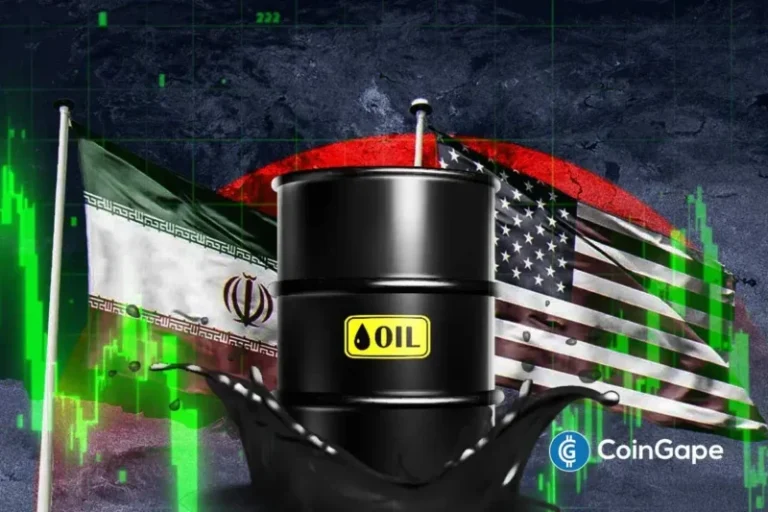
As the US-Iran war enters its 36th day, global oil prices have surged past $111, with a more than 11% hike. This sudden rise in the crude oil price is driven by raising fears over the security of key maritime trade routes. Following the closure of the Strait of Hormuz, markets are now bracing for
XRP price is attempting to stabilize after sliding to $1.31 on Saturday amid broader crypto weakness. The XRP price has struggled through a multi-month decline since peaking near $2.40 in January. Recent trading shows XRP holding near key technical support as investors weigh macro and regulatory developments. The wider crypto market was under the pressure
Ripple Treasury has joined the SWIFT Certified Partner Program, which has led to a shift in how corporate treasury systems connect with banking facilities. The integration permits direct access to SWIFT’s network while adding real-time functionality through blockchain-linked tools. The platform, developed through a partnership between Ripple and GTreasury, combines traditional financial operations with digital
As the US-Iran war continues to escalate, Bitcoin is feeling the heat again. Amid rising uncertainty, analysts warn the pioneer cryptocurrency could see massive declines, possibly dropping to a low of $10,000. Ad Ad Analysts Predict Bitcoin Crash to $10K In a critical analysis on CryptoQuant, XWIN Research Japan projected a massive 80% fall in
Strategy (formerly MicroStrategy) could resume its aggressive Bitcoin accumulation, with perpetual preferred stock STRC generating sufficient funds in recent trading sessions. MSTR stock price closed 2.40% at $119.83 on Thursday. Ad Ad Strategy Perpetual Preferred Stock STRC Signals Over 1,800 BTC Buy Strategy’s Stretch perpetual preferred stock (STRC) is estimated to have raised enough money
David Schwartz, CTO Emeritus at Ripple, highlighted three advantages that XRP holds over stablecoins. He put forward the comments while explaining how both assets serve different roles in financial systems. At the same time, he pointed out that XRP is not in competition with stablecoins. However, he identified a gap between the two. According to
The U.S. jobs report has come in stronger than expectations, signaling that the labor market may be stabilizing even amid the U.S.-Iran war. Bitcoin dropped following the data release as traders cut their bets on Fed rate cuts this year. Ad Ad U.S. Jobs Report Comes In Strong, Bitcoin Falls The latest Bureau of Labor
Stocks surged Tuesday, with the S&P 500 closing up 2.9% while the Nasdaq rose 3.8% and the Dow gained 1,125 points.
Subscribe to read this story ad-free
Get unlimited access to ad-free articles and exclusive content.
But this very good day capped off what was a very bad month for U.S. equities. The S&P 500 fell 5.09% in March, and the Nasdaq Composite declined 4.75%.
The U.S.-Israeli war on Iran and the near-total blockade of the Strait of Hormuz, a narrow, Iranian controlled waterway through which a fifth of the world’s crude oil typically transits every day, weighed heavily on markets throughout the month.
Tuesday was also the end of the first quarter of the year, one when the S&P 500 and Nasdaq posted their worst annual starts since 2022, when the Russian invasion of Ukraine rocked markets.
For the first quarter, the S&P 500 dropped 4.6% and the Nasdaq declined 7.1%.
Oil prices, meanwhile, soared over the past month, driving up the cost of fuel and triggering a domino effect of higher prices around the globe.
Brent, the international oil benchmark, posted its largest monthly percentage increase ever, after having risen more than 60%. The price of U.S. West Texas Intermediate crude oil also soared in March, climbing more than 50% in its biggest one-month gain since 2020.
For millions of drivers in the U.S., the increases manifest as higher prices for gas. And here, too, the past month was remarkable. The average price of unleaded gasoline hit $4 per gallon Tuesday, up more than 34% in just four weeks.
But it’s not just gas prices that hit U.S. households this month.
More than half of all adults in the U.S. own stocks, often via their retirement accounts and the broader funds those managed accounts invest in. Most of the time, market moves up and down don’t swing the value of those kinds of diversified retirement accounts.
But March was a different story.
“Stocks have been following the lead of oil prices at an unprecedented rate over the last several weeks, and if the U.S. just walked away from the Middle East with the Strait still blockaded, energy markets would likely remain incredibly supply-constrained, keeping prices high,” analysts at Bespoke Investment Group wrote Tuesday.
“The longer prices are high and supplies are limited, the worse it’s going to be for the global economy and ultimately stock prices,” they added.
The wild market swings of the second Trump administration are in sharp contrast to how Donald Trump said the markets would react if he were elected to a second term in 2024.
“There are many people that are saying that the only reason the Stock Market is high is because I am leading in all of the Polls, and if I don’t win, we will have a CRASH of similar proportions to 1929,” Trump wrote on Truth Social in May 2024 as he campaigned for the presidency.
Shortly after he was re-elected in 2024, Trump was asked whether he believed market indexes were good barometers of his performance in office. “To me … all of it together, it’s very important,” he told CNBC.
But during the first 14 months of his second term, U.S. markets have faced some of the sharpest drawdowns in history.
In February and March of last year, Trump’s sweeping tariff policies roiled the market, pushing the S&P 500 into its seventh-fastest correction of all time. A correction is when a stock or an index declines 10% from its most recent record high.
Just over a year later, the S&P 500 isn’t far from doing it again. As of Tuesday’s closing bell, the index had tumbled 6.7% from its most recent high in January.
As oil prices rise, stocks typically fall given that higher oil prices typically lead to higher prices across a number of industry sectors over the long run.
Already, inflation is on the rise around the world. On Tuesday morning, eurozone inflation came in at 2.5%, from 1.9% the month before, according to the European Central Bank.
On Tuesday, the Nikkei 225 in Japan recorded its worst month since 2008. In Europe, the Stoxx 600 index posted its worst month since 2022.
Two near-corrections in just over a year illustrates just how volatile the administration’s policies have been for markets.
Still, since Trump took office for a second time, the S&P 500 is up 8%, although last year global stocks far outpaced the broad U.S. index.
In 2025, global stocks as measured by the MSCI ACWI ex USA index rose nearly 30%, while U.S. stocks rose just 16%. Global stocks haven’t beaten American equities by that much during the first year of a presidential term since 1993, according to data from Bloomberg.
In recent weeks, Trump has repeatedly touted the Dow’s recent 50,000 milestone as a sign that the markets are doing well in his presidency.
“You know, it’s sort of crazy, I hit 50,000 on the Dow,” Trump said at an investment conference in Florida on Friday. “People said that wouldn’t be possible within four years.”
“And then we hit 7,000 on the S&P,” Trump added. “People said that’s even harder than hitting 50,000 on the Dow.”
As of Tuesday, the Dow had plunged more than 3,600 points since it hit 50,000, a drop of nearly 7.5%.