Binance, one of the world’s largest crypto exchanges, is facing yet another legal setback. The platform faces a $10 million fine from the Australian Federal Court after experiencing legal difficulties in the United States. The court decision followed Binance’s admission that it had mistakenly identified most of its customers, who then used high-risk derivatives meant
MSTR stock price faces renewed downside risks after a Strategy board director filed with the US SEC to sell company shares. It coincides with the stock’s recent weakness. MicroStrategy Class A stock is under selling pressure amid share dilution, lower analyst forecasts, and falling Bitcoin prices. Strategy Director Jarrod Patten Sold 700 Class A Common
A new clash is brewing between lawmakers and the Federal Reserve. At the centre of the debate is Kraken’s recent acquisition of a limited-purpose master account, granting it access to the Fed’s payment infrastructure. This approval has created doubts about the organization’s transparent operations and its legal adherence to established standards. Lawmakers, including Maxine Waters,
A U.S. federal court in San Francisco has halted key actions taken by the Trump Administration against Anthropic, granting the artificial intelligence firm temporary relief. The ruling blocks a Pentagon designation that labeled the company a supply chain risk and suspends a directive that ordered federal agencies to stop using its AI system, Claude. Judge
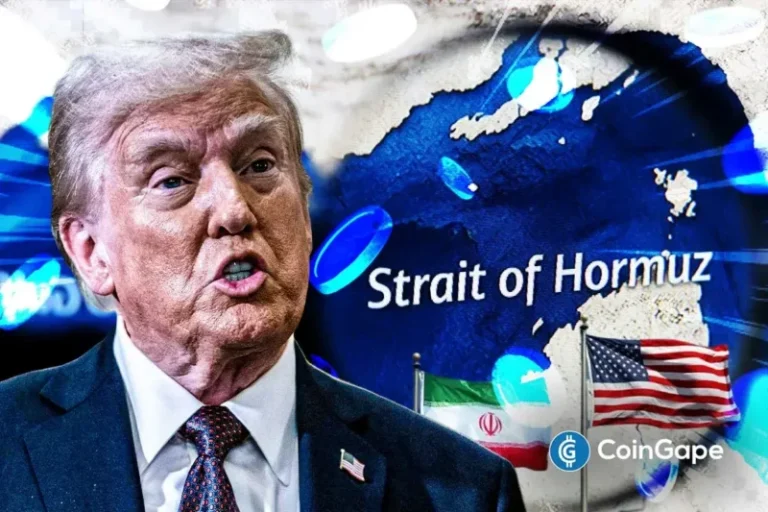
Iran has declared that the Strait of Hormuz remains closed as the U.S.-Iran war approaches the one-month mark. This latest development follows Trump’s decision to delay strikes on Iran’s energy infrastructure on the claim that Iran had made this request with ongoing peace talks. Iran Declares Strait of Hormuz Still Closed as U.S.-Iran War Drags
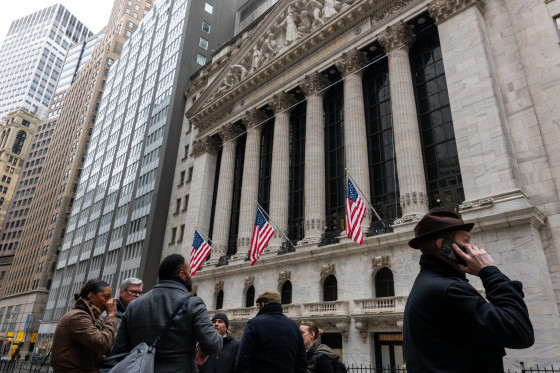
U.S. stocks surged Monday, after President Donald Trump announced that he was postponing all military strikes on Iranian power plants for a five-day period.
Trump said the U.S. and Iran had engaged in what he called “very good and productive conversations regarding a complete and total resolution of our hostilities in the Middle East.”
Reporting about the nature and timing of these “conversations” evolved over the course of the day, and included conflicting accounts from various stakeholders.
But for markets, the talks offered a glimmer of hope that a path toward the de-escalation of the conflict — and the oil crisis it created — were within reach.
Iranian state media responded to Trump’s post by saying the U.S. president has “backed down” after Iran’s firm response.
Trump, however, said that Iran had “called” to discuss trying to resolve the war diplomatically.
“They want to make a deal, and we are very willing to make it,” Trump told reporters before boarding Air Force One in Florida.
The Strait of Hormuz, a crucial transit point for global oil supplies, could be “open very soon,” Trump added, but he provided few details.
Experts and analysts quickly pointed out that even if the fighting were to end this week, it would still take months for the strait to reopen.
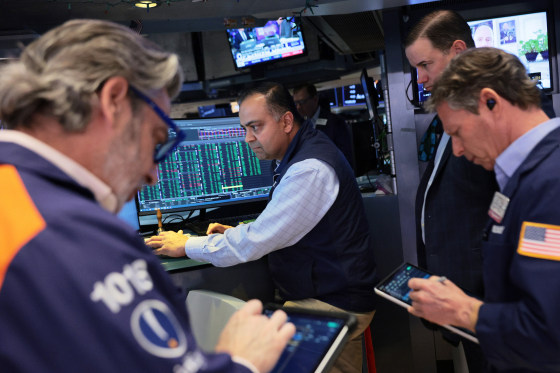
The S&P 500 and Nasdaq 100 futures initially soared about 3% on Trump’s post shortly after 7 a.m. ET. By the time the closing bell rang, both indexes still recorded significant gains, but less than futures had indicated early in the morning. The S&P 500 closed up 1.1% and the Nasdaq Composite ended the day higher by 1.4%.
The gains were also broad based, with every S&P sector ending the day higher.
The Dow Jones Industrial Average also shot higher immediately after Trump’s statement. By the end of the trading session, the Dow was higher by 631 points, and the Russell 2000 index closed up 2.7%.
It was the best day for the S&P, Nasdaq and Dow since Feb. 6.
Oil prices plunged around 11% and U.S. crude oil settled for the day at $88.13 per barrel. International Brent crude oil fell to $99.94 per barrel, settling under $100 per barrel for the first time since March 11.
Still, crude oil prices have risen more than 30% since the war began on Feb. 28, and more than 50% since the start of the year.
Trump’s Monday announcement on social media came after the president on Saturday said that he had given the Iranian regime 48 hours to “fully open, without threat, the Strait of Hormuz.” That ultimatum was set to expire Monday night.
U.S. natural gas prices dropped 6% Monday, European natural gas futures slid 9% and heating oil prices dropped 12%. Heating oil futures can also be a proxy for the price of jet fuel.
U.S. Treasury bonds also rose in the minutes after Trump’s comments, and the yields which guide borrowing rates for consumers dropped after posting big moves higher on Thursday and Friday on rising inflation fears stemming from soaring energy prices. Yields were down only slightly in mid-morning trading after the statements from Iranian media and Trump.
Investors were already grappling with how to trade headlines about the war before Monday’s volatility.
“Investors have two related problems in pricing risks around the Gulf war,” UBS economist Paul Donovan said in a note on Monday before Trump’s post. “Statements from top U.S. administration officials give different and at times contradictory assessments of the war; in the absence of measurable objectives, this is all markets have to respond to. The result is volatility.”
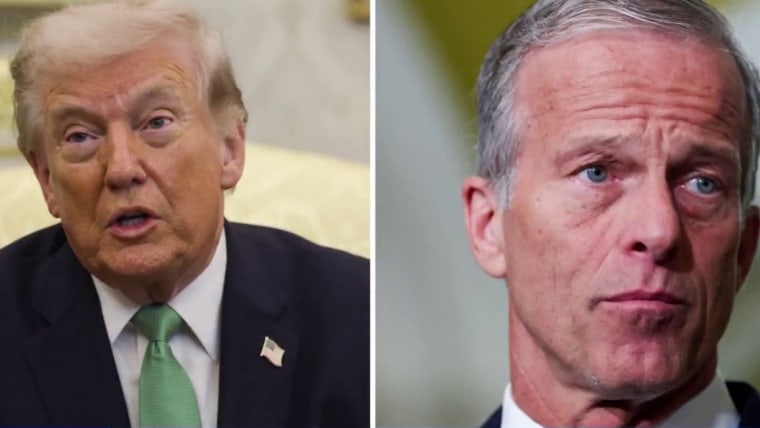
WASHINGTON — On Sunday, Senate Majority Leader John Thune, R-S.D., discussed an off-ramp with President Donald Trump to reopen TSA and end the long lines and delays at airports.
It would fund all of the Department of Homeland Security except for ICE, which Democrats have refused to support without new limitations on immigration enforcement operations, two sources with knowledge of the conversation told NBC News.
White House aides initially conveyed the idea to Trump and, after that briefing, Thune spoke with the president, the two sources said. Thune discussed the idea with Republicans on Capitol Hill, one of the sources said. The second source said it’s seen by numerous Republicans as a viable path to break the logjam.
ICE would be funded separately by Republicans in a party-line “reconciliation” bill that can pass without the need for any Democratic support later in the year.
The Department of Homeland Security has been shut down for more than a month, and while key operations, such as TSA and the Federal Emergency Management Agency, are still operating, many of those employees are working without pay. As NBC News reported this weekend, more than 400 TSA officers have quit since the shutdown began. Immigration and Customs Enforcement is also shut down, but its employees are being paid through Trump’s big beautiful bill passed last year.
Republicans believe that the off-ramp Trump and Thune discussed would win support from Democrats, who have offered to fund noncontroversial parts of the Department of Homeland Security on the Senate floor while the two parties continue to negotiate on immigration.
But Trump rejected it — as he made clear in a Truth Social post Sunday night.
“I don’t think we should make any deal with the Crazy, Country Destroying, Radical Left Democrats unless, and until, they Vote with Republicans to pass ‘THE SAVE AMERICA ACT,’” Trump wrote, while instead calling on Republicans to “Kill the Filibuster, and stay in D.C. for Easter, if necessary.”
Trump’s first two ideas aren’t viable. Democrats are determined to sink the SAVE America Act, which doesn’t have enough support to pass. And Republicans have made clear they lack the votes to nuke the filibuster. They may, however, cancel recess if there’s still no deal by the end of this week.
The conversation with Thune and Trump was first reported by Punchbowl News.
Speaking Monday in Memphis, Tennessee, the president doubled down on his demands to pair Homeland Security funding with the voting bill.
“You don’t have to take a fast vote. Don’t worry about Easter, going home. In fact, make this one for Jesus. OK, make this one for Jesus,” Trump said, adding: “The most important part of homeland security is voter ID and proof of citizenship. Nobody can vote on Homeland Security without voter ID or proof of citizenship.”
Senate Minority Leader Chuck Schumer’s office said that Democrats will again seek unanimous consent to fund just the TSA on the Senate floor Monday, for the eighth time.
Republicans have so far rejected those stand-alone bills.
If Trump were to change his mind and accept the Thune-GOP idea, it carries benefits for both parties. For Republicans, they could avoid giving into Democratic demands, such as requiring immigration enforcement officers to remove their masks and requiring judicial warrants to conduct raids. For Democrats, they could keep their fingerprints off ICE funding, which has become toxic with their base since Homeland Security agents killed protesters Alex Pretti and Renee Good in Minneapolis.
“We can be out of this shutdown by the end of the week,” Sen. John Kennedy, R-La., said Sunday. “Here’s what we do. The Democrats are amenable to opening up everything at DHS but ICE. We should accept that. The very next day, we should file a budget resolution through reconciliation that funds ICE as we deem appropriate. We don’t need Democratic votes to do that.”
Democrats are also planning to seize on the Trump social media post to argue that he owns the shutdown and travel chaos.
Reconciliation bills are arduous, requiring near-unanimous support among Republicans, especially given the tiny House majority. There has been deep skepticism that the party could pull it off, even if it tried. But needing to fund an agency like ICE would raise the impetus to use that path.
Under the “big, beautiful bill” passed by Republicans last year, ICE received a cash infusion of about $75 billion for the next four years to help carry out Trump’s mass deportation program.
The path comes with another possible upside for the White House: Some Trump allies have proposed reconciliation to approve supplemental funding for Trump’s war in Iran. It’s not clear that could win enough Democratic support.
The two pilots killed in the collision between a passenger jet and a Port Authority fire truck at New York’s LaGuardia Airport late Sunday have been identified as Antoine Forest and Mackenzie Gunther.
The pair have yet to be officially named by authorities, who have said only that both pilots of the Canada Air Express plane died and that they were based in Canada. Their identities were confirmed by Canadian news reports and by a college that one pilot attended.
Antoine Forest, one of the pilots who reportedly died in the LaGuardia plane collision.via Facebook
The Federal Aviation Administration, the National Transportation Safety Board and other agencies are investigating the crash. They will seek to determine how the truck was able to cut across the jet’s path moments after it touched down on the runway.
Here’s what we know about the fatal crash.
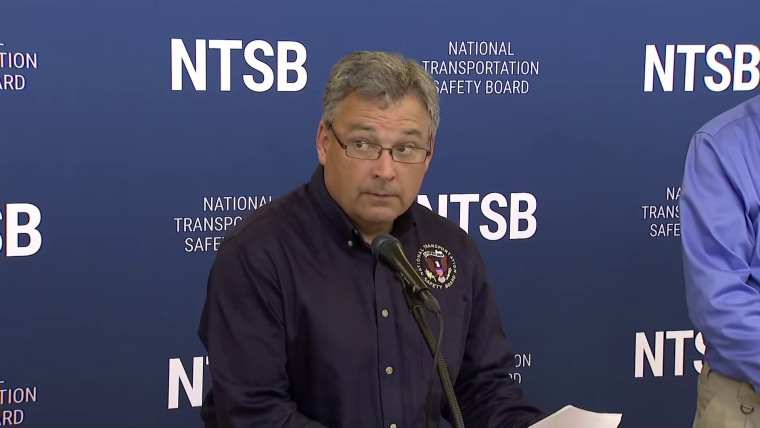
At a news conference Tuesday afternoon, NTSB officials released preliminary information gleaned from the final three minutes of the plane’s cockpit voice recorder that showed that the fire truck was cleared to cross the runway 20 seconds before the crash.
At 2 minutes and 22 seconds, the flight crew checked in with the tower at LaGuardia, said Doug Brazy, NTSB’s senior aviation investigator.
At 2 minutes and 17 seconds, the tower cleared the airplane to land on Runway 4.
Brazy said that at 1 minute and 3 seconds, an airport vehicle made a radio transmission to the tower but that the transmission was “stepped on” by another radio transmission. NTSB Chairwoman Jennifer Homendy said that means there was some sort of interference with the transmission.
At 54 seconds, the tower advised the flight crew that the plane was at a stable approach, Brazy said.
At 40 seconds, the LaGuardia tower asked which vehicle needed to cross a runway. Brazy said the fire truck made a transmission to the tower, which the tower acknowledged. At 25 seconds, the truck requested permission to cross Runway 4. Brazy said that at 20 seconds, the tower cleared the truck to cross.
At 17 seconds, the fire truck read back the runway crossing clearance, he said. According to Brazy, the tower instructed a Frontier Airlines flight to hold position, and at 9 seconds, the tower told the fire truck to stop.
At 8 seconds, there was a sound consistent with the airplane’s landing gear touching down on the runway, he said. At 6 seconds, there was a pilot transfer of controls. Homendy told reporters that the first officer was flying the plane and transferred control to the captain.
At 4 seconds, the tower again instructed the fire truck to stop, Brazy said.
At least 40% of Russia‘s oil export capacity is at a halt following Ukrainian drone attacks, a disputed attack on a major pipeline and the seizure of tankers, according to Reuters calculations based on market data.
The shutdown is the most severe oil supply disruption in the modern history of Russia, the world’s second largest oil exporter, and has hit Moscow just as oil prices exceeded $100 a barrel due to the Iran war.
Russia’s oil output is one of the main sources of revenue for the national budget and is central to the $2.6 trillion economy.
An oil tanker moored in Novorossiysk, Russia, in 2022.AP
Ukraine intensified drone attacks on Russia‘s oil and fuel export infrastructure this month, hitting all three of Russia‘s major western oil export ports, including Novorossiysk on the Black Sea and Primorsk and Ust-Luga on the Baltic Sea.
According to Reuters calculations, about 40% of Russia‘s crude oil export capabilities — or around 2 million barrels per day, were shut as of Wednesday after the most recent attack.
That includes Primorsk and Ust-Luga as well as the Druzhba pipeline, which runs through Ukraine to Hungary and Slovakia.
Kyiv has also targeted pipeline oil pumping stations and refineries. Kyiv says it aims to diminish Moscow’s oil and gas revenue, which accounts for around a quarter of Russia‘s state budget proceeds, and weaken its military might.
Russia says the Ukrainian strikes are terrorist attacks and has tightened security across its 11 time zones.
Firefighters extinguish a blaze at a chemical transport terminal at Russia’s Ust-Luga port on Jan. 21, 2024. Local media reported that Ukrainian drones attacked the port.Telegram Channel of head of the Kingisepp district via AP
Ukraine said that part of the Druzhba pipeline was damaged by Russian strikes at the end of January, while both Slovakia and Hungary demanded Kyiv restart the supplies immediately.
The Novorossiysk oil terminal, which can handle up to 700,000 bpd, has been loading oil below plan since damage from a heavy Ukrainian drone attack early this month.
In addition, frequent seizures of Russia-related tankers in Europe have disrupted 300,000 bpd of Arctic oil exports flowing from the port of Murmansk, traders said.
With its westward export routes under fire, Moscow must rely on oil exports to Asian markets, but those routes are limited due to capacity, traders said.
Russia continues uninterrupted supplies via pipelines to China, including the Skovorodino-Mohe and Atasu-Alashankou routes, as well as ESPO Blend exports by sea via the port of Kozmino.
Together, the three routes account for some 1.9 million bpd of oil.
Russia also continues to load oil from its two far eastern Sakhalin projects, shipping about 250,000 bpd from the island.
Traders also say that Russia is supplying the refineries in neighboring Belarus with around 300,000 bpd of oil.
U.S. stocks rose Wednesday and global oil prices fell in yet another volatile trading session as traders and investors were buffeted by constant headlines about the war in Iran.
News of a 15-point U.S. peace plan proposal sparked hopes early in the day that the Trump administration was moving to end its monthlong war against Iran. Initially, the S&P 500 and the Nasdaq 100 futures rose more than 1%.
But reports that Iran had responded negatively to the proposal briefly knocked index futures off their pre-market highs and lifted oil prices off their morning lows.
Despite the early setback, stocks closed the trading day higher. At 4 p.m. ET, the S&P 500 index was up about 0.4%, the Nasdaq Composite closed 0.7% higher, and the Dow jumped 305 points. The Russell 2000 index of smaller companies rose 1.1%.
The price of U.S. crude oil also traded off its lowest levels of the day and was down only 1.4% to about $90 per barrel by late afternoon. West Texas Intermediate crude oil has soared more than 30% since the start of the war on Feb. 28. The cost per barrel is up 50% since the beginning of the year.
International Brent crude prices traded near breakeven, at around $102 per barrel. The price of heating oil, a proxy for jet fuel, dropped 6%.
The global price of oil directly affects what Americans pay at the gas pump and what it costs them to heat and cool their homes. The average nationwide price of unleaded gas Wednesday was $3.98 per gallon, according to AAA data.
“Markets desperately want to believe in the positive,” UBS Global Wealth Management chief economist Paul Donovan wrote. “Focus on the apparent 15-point US plan to end the war has received more attention than Iranian dismissals of this, or the fact that passage through the Strait of Hormuz is minimal.”
Iran’s response to the U.S. proposal included a list of five conditions for ending the war, according to Iranian state TV, which cited a senior political-security official with knowledge of the details of the proposal.
Pakistan has also offered to mediate talks to end the hostilities, four sources told NBC News. A Persian Gulf official said Pakistan had been passing messages between the two countries for the past two days.
An in-person meeting between the U.S. and Iran could be held in the coming days, two sources added.
But President Donald Trump has continued to give conflicting signals.
On March 16, Trump said he was delaying his scheduled visit to China “by a month or so” to monitor the war. On Monday, he said the Strait of Hormuz would be “open very soon.”
And on Tuesday, Trump told reporters in the Oval Office, “This war has been won.” At the same time, the U.S. is sending more than 1,000 additional troops to the Middle East, sources said.
A motorist drives past a sign displaying prices at a gas station in Oakland, Calif., on Tuesday.Godofredo A. Vásquez / AP
Since the war started, the market has experienced several days like this, when markets are whipsawed by constant back-and-forth comments.
“There’s really no way to know at this point what the facts are regarding the state of negotiations, as neither side has any real incentive to conduct talks via the press, so expect more whipsaw action as things continue to progress,” analysts at Bespoke Investment Group wrote in a client note.
They added that the “ongoing tensions continue to support higher prices [and] stoke inflation concerns” and are likely to cause central banks to remain on hold, rather than cut rates.
On the contrary, traders believe the European Central Bank and the Bank of England will both raise interest rates.
“Uncertainty remains high,” analysts at ING wrote in a note Wednesday morning. “Overall, volatility remains elevated and a geopolitical risk premium persists.”
In the 18 trading sessions since the war began, U.S. oil prices have closed down only five times. Likewise, over the same period, the S&P 500 has closed higher only seven times. Three of those higher closes were only fractional.
After Wednesday’s close, the Nasdaq was down nearly 6% for the year, while the S&P 500 was on track for a 3.5% loss so far. The majority of those losses were concentrated in the weeks since the war began.
Meanwhile, the Strait of Hormuz, through which 20% of the world’s oil supply typically passes, has remained at a near standstill since the war began.
On Monday, just five ships passed through the strait, according to data compiled by S&P Global Market Intelligence. On Tuesday, the total was six. On many days since the war started, not a single ship has passed through.
However, some of the ships passing through the strait have taken an unusual course that put them close to the Iranian coastline, potentially signaling that Tehran was keeping a tight grip on traffic flows. Two Indian ships were granted passage Tuesday after a deal with Iran, Bloomberg News reported. The Iranian navy also guided the ships.
Otherwise, hundreds of other ships loaded up with cargo, oil and liquefied natural gas remain stuck.