
Archive

February 4, 2026

Browsing

Elon Musk’s Neuralink has captured the public’s attention and imagination with its futuristic vision of connecting the human brain to computers.

Neuralink has drawn interest to the brain computer interface (BCI) sector with its N1 implant, which is undergoing human trials in patients with spinal cord injuries (SCIs) and ALS.

Musk’s company is far from the only one developing BCI tech to assist users with conditions such as SCIs, ALS and neurological disorders.

‘The number of new firms entering the space and the amount of venture funding being distributed to startups surpasses any other product category we have seen in the 25 years we have been covering the neurotechnology industry,’ Neurotech Reports stated in June 2025.

As Neuralink continues to make strides, investors are wondering how to get a piece of the action by investing in the neurotechnology venture.

Because it is privately held, Neuralink stock isn’t accessible to the average person — but that doesn’t mean it’s impossible to get exposure to this future-looking medical research company. Read on to learn how to participate in the growth of this exciting business, and other BCI firms you can invest in.

In this article

    What is Neuralink?

    Neuralink is a neurotechnology startup that was founded in 2016 by Tesla (NASDAQ:TSLA) CEO Musk and a team of eight scientists and engineers in 2016.

    It was first reported on in 2017, and two years later, in June 2019, the company held and streamed its public launch event to showcase the technology it is developing: an innovative brain-computer interface.

    Instead of using traditional electrodes, which, according to a company whitepaper, can be bulky and damaging to brain tissue, Neuralink’s BCI uses “ultra-thin threads” that are implanted into the brain using a robotic device that resembles a sewing machine. Once implanted, the electrodes develop a BCI, stimulating the brain and monitoring activity, and the threads connect to a custom-designed chip that can read data from groups of neurons.

    Musk announced the coin-sized Telepathy chip, with over 1,000 electrodes 20 times finer than hair, in January 2024.

    Potential uses of BCI technology include helping paralyzed individuals regain control of their limbs and restoring vision. Musk told his audience during Neuralink’s 2019 launch event that this technology could have a wide range of applications in medicine, such as restoring sensory and motor function in people with spinal cord injuries or neurological disorders. Additionally, an early goal of development is translating neuron signals into computer commands, which would allow humans to control devices like computers and smartphones with their brainwaves.

    Musk has claimed that BCI could even facilitate direct communication between humans and machines, although some members of the neuroscientific community are skeptical.

    Other experts have suggested that Neuralink’s work is not necessarily novel, as Dr. Jason Shepherd, an associate professor of neurobiology at the University of Utah, told Business Insider in 2020. “All the technology that he showed has been already developed in some way or form,’ he said. ‘Essentially, what they’ve done is just package it into a nice little form that then sends data wirelessly.”

    Other experts in the field have ethical concerns about how Neuralink is conducting its clinical trials and the broader implications of disregarding established standards.

    “If you decide to play with fire in a house, you increase the risk threshold not only of yourself but of the whole house,” Marcello Ienca, a professor of ethics of AI and neuroscience at Technical University of Munich, told Forbes in 2024. “My fear is that Neuralink’s disregard for the ethical aspects of their technology may cause a backfire effect for the entire neurotechnology community.”

    How much is Neuralink worth?

    Neuralink was valued at around US$9.7 billion as of June 2025, but as a privately held business, much of its financial information is kept under wraps. That said, US Securities and Exchange Commission (SEC) documents containing information about its funding rounds provide some insight.

    The earliest came in 2017, when the company raised US$27 million out of a planned US$100 million in a Series A funding round. In April 2019, SEC filings show the company acquired US$39 million out of a planned US$51 million in a Series B funding round. A limited amount of information has been made available to the public, and the identities of the investors have not been publicly disclosed. However, some news outlets have speculated that funding could have come from a combination of venture capitalists, or from Musk himself and the Neuralink team.

    In 2021, Neuralink received what was then its largest amount of money to date, raising US$205 million in a funding round led by tech investment firm Vy Capital. Other participants included Google Ventures, the venture capital arm of Alphabet (NASDAQ:GOOGL); OpenAI CEO Sam Altman; Fred Ehrsam, co-founder of Paradigm and Coinbase Global (NASDAQ:COIN); and Ken Howery, co-founder of PayPal Holdings (NASDAQ:PYPL) and Founders Fund.

    In May 2023, as Neuralink faced public backlash over accusations of animal mistreatment, it received clearance from the US Food and Drug Administration (FDA) to run the first human trial of its brain implant. Just months later, in August, Neuralink closed a US$280 million funding round led by Founders Fund. The filing was amended in November 2023 to reflect an additional US$43 million, bringing the total to US$323 million.

    Most recently, the company announced the closure of a US$650 million Series E funding round in June 2025.

    Is Neuralink approved for human trials?

    In May 2023, Neuralink received clearance from the US Food and Drug Administration (FDA) to run the first human trials of its brain implant. The company opened a patient registry in early 2023 that allowed people who had at least one of a qualifying list of conditions to volunteer for upcoming clinical trials. It is also approved for human trials in Canada, Great Britain and the UAE.

    The first US study, dubbed PRIME — Precise Robotically Implanted Brain-Computer Interface — is specifically focused on patients with cervical spinal cord injuries or amyotrophic lateral sclerosis (ALS). It has an estimated primary completion date of January 2026 and is estimated to be fully completed by January 2031.

    The study’s first participant, a patient with quadriplegia, received the implant on January 28, 2024; Musk reported a quick recovery and ‘promising neuron spike detection’ the following day.

    A month later, Musk said the patient, who is named Noland Arbaugh, could control a cursor mentally. Arbaugh shared 100-day positives in May 2024, calling it a success over prior tech. One of the largest benefits is that it allows him to operate his computer and other devices lying down, while he needed assistance for setup and repositioning with prior devices. He explained that the change gives him more freedom to live on his own time.

    The study’s next two participants were a patient who became paralyzed following a spinal cord injury from a diving accident and another who lost use of his limbs to ALS. The company issued an update on their progress in February 2025, with all three patients touting positive changes following the procedure.

    As of January 2026, Neuralink has now implanted devices in 21 trial participants across the US, Canada, the UK and the UAE.

    The UAE-PRIME trial began recruiting in May 2025 via the Cleveland Clinic Abu Dhabi, while the GB-PRIME study launched in Great Britain two months later.

    Neuralink is also conducting the CONVOY study in the US, announced in November 2024, testing the use of the implant to control an investigational assistive robotic arm. It is open to participants of the PRIME study.

    Meanwhile, the company received FDA breakthrough device designation for Blindsight, a capability being developed to generate visual perception by activating brain areas responsible for visual function, as well as for its speech restoration technology, in 2024 and 2025, respectively. Blindsight trials aimed at restoring vision for the blind are reportedly planned to begin soon in the UAE.

    Looking ahead, Musk says the company will begin high-volume chip production in 2026. In a January update, Neuralink shared plans to improve the implant, including raising electrodes from 1,000 to 3,000. It is also investigating a change to the surgical procedure that would reduce invasiveness by inserting the implant’s threads through the dura mater, the brain’s tough outer membrane.

    How to invest in Neuralink?

    With Neuralink continuing to move forward, how can investors get a piece of this up-and-coming technology?

    The firm has yet to go public, so purchasing Neuralink stock is not an option for many investors. However, there are still ways for investors to potentially profit from Neuralink’s growth before it goes public.

    The vast majority of Neuralink’s funding has come from venture capitalists and a handful of billion-dollar companies. Investors can gain indirect exposure to Neuralink before its IPO by buying publicly traded companies that have invested in the company. This includes Alphabet (NASDAQ:GOOGL), which has funded Neuralink via its subsidiary Google Ventures. This strategy captures potential upside from Neuralink’s growth.

    Those who qualify as accredited investors could also potentially invest in a Neuralink funding round. According to the SEC, an accredited investor must have a net worth of at least US$1 million, not including the value of their primary residence, or an annual income of at least US$200,000 for individuals and US$300,000 for married couples. There must also be a reasonable expectation of the same level of income in the year of filing.

    Individuals can also qualify as accredited investors if they are investment professionals in good standing. In that case, the SEC’s guidelines indicate that they need to hold either a general securities representative license, an investment advisor representative license or a private securities offerings representative license.

    Entities like banks, insurance companies or investment firms with total assets of at least US$5 million may also qualify as accredited investors. Certain types of entities, such as private business companies and small business investment companies, may be exempt from the standard asset value requirements for accredited investor status.

    It’s also worth noting that Neuralink is just one of several companies currently working on developing BCI technology:

      The potential for BCI to impact various industries such as robotics, medicine and biotech has generated a growing amount of interest and excitement. Additionally, heightened interest in the artificial intelligence (AI) sector has led to more research and exploration in related fields, and has attracted increased investment in fields benefiting from AI advancements, including robotics and medicine.

      AI is also being used as a tool to help discover new insights and make moves that might not have been possible without its use. Scientists in California have even developed a brain implant capable of decoding and vocalizing inner speech.

      Finally, one of the simplest ways to gain exposure to Neuralink would be through an exchange-traded fund (ETF) that invests in companies related to BCI technology. While there isn’t an ETF that exclusively focuses on BCIs, there are funds that offer exposure to related themes.

      In the health sector, some options covering similar themes include medical device ETFs and the iShares Healthcare Innovation ETF (LSE:HEAL,OTCPK:BLKIF), a fund that consists of companies that are developing new and innovative healthcare technologies.

      Two other options are the Global X Robotics & Artificial Intelligence ETF (NASDAQ:BOTZ), which includes companies that are involved in the development of robotics and AI, and the ARK Innovation ETF (ARCA:ARKK), which focuses on disruptive technologies across multiple industries, including healthcare and robotics.

      As with any investment decision, it’s important to perform due diligence on available options, including comparing ETFs, to ensure they align with one’s investment goals.

      Securities Disclosure: I, Meagen Seatter, hold no direct investment interest in any company mentioned in this article.


      This post appeared first on investingnews.com

      Japan announced that it has successfully retrieved mineral-rich seabed sediment from nearly 6,000 meters below the ocean’s surface near the remote island of Minamitorishima.

      Officials say the technical milestone could help reduce the country’s dependence on China.

      The work was carried out by deep-sea drilling vessel Chikyu, which collected the sediment as part of a government-backed test program aimed at assessing the feasibility of mining rare-earths-bearing mud from the deep ocean.

      According to Japan’s Agency for Marine-Earth Science and Technology, Chikyu departed last month for Minamitorishima — about 1,950 kilometers southeast of Tokyo — and arrived at the test site on January 17.

      The first batch of sediment was recovered on February 1.

      “It is a first step toward industrialization of domestically produced rare earth in Japan,” Prime Minister Sanae Takaichi said in a statement posted on X. “We will make efforts toward achieving resilient supply chains for rare earths and other critical minerals to avoid overdependence on a particular country.”

      Rare earths are essential in the high-performance magnets used in electric vehicles, wind turbines, electronics and defense systems. China currently dominates global production and processing of heavy rare earths, giving Beijing significant influence over prices and supply, a vulnerability that has increasingly worried world governments.

      Japan’s latest test comes amid heightened geopolitical tension in the region.

      Tokyo has grown more concerned about potential supply disruptions after China recently suspended exports of certain dual-use goods to Japan. While rare earths were not explicitly named, the move raised fears that Beijing could use its control over critical minerals as leverage as it has in the past.

      Japanese researchers first identified rare-earth-rich mud deposits around Minamitorishima in the 2010s. Since then, the government has funded research, development and feasibility studies under its Strategic Innovation Promotion Program, focusing on whether those resources could support a domestic supply chain.

      The current trial is designed to test not only the ability to retrieve sediment from extreme depths, but also the logistics of deep-sea mining. Officials cautioned that the work is still at an early stage. Details such as the concentration of rare earth elements in the retrieved mud and the overall recovery rates are still being analyzed. Moving toward commercial production would require demonstrating the entire process, from seabed extraction to separation and refining.

      Japan plans to continue testing through mid-February. If the trials are successful, larger-scale demonstrations could follow, potentially including the construction of a dedicated processing facility on Minamitorishima later this decade.

      US targets rare earths security with Project Vault

      While Japan pushes deeper into rare earths supply diversification, developments in the US underscore how deeply critical minerals policies are shaping markets on both sides of the Pacific.

      On Monday (February 2), the Trump administration rolled out Project Vault, a roughly US$12 billion strategic critical minerals reserve aimed at reducing US dependence on China for rare earths and other essential metals.

      The initiative, anchored by a US$10 billion loan from the US Export‑Import Bank and about US$2 billion in private capital, is designed to stockpile strategic materials like rare earths, cobalt and lithium.

      The program’s backers say the reserve will function much like America’s Strategic Petroleum Reserve, offering a buffer against global supply disruptions and insulating manufacturers from price shocks that have plagued markets during recent US-China trade tensions. Analysts say the effort signals an ongoing shift toward industrial policy that treats critical minerals as strategic assets, even as completion details and long‑term execution remain uncertain.

      The financial markets responded quickly. Shares of Australian rare earths producer Lynas Rare Earths (ASX:LYC,OTCQX:LYSDY) rallied more than 3 percent on Tuesday (February 3), closing at AU$15.25, reflecting renewed investor interest tied to the policy news and the broader rare earth narrative.

      Lynas’ recent movements come against a backdrop of broader gains in non‑Chinese mineral producers, as investors reposition around supply chain security and government policy support.

      Rare earths stocks more generally saw upticks in the US market after the country’s critical minerals plan came into focus, with producers like MP Materials (NYSE:MP) and USA Rare Earth (NASDAQ:USAR) gaining on reports of increased government engagement in critical mineral sourcing.

      Securities Disclosure: I, Giann Liguid, hold no direct investment interest in any company mentioned in this article.

      This post appeared first on investingnews.com

      NOT FOR DISTRIBUTION TO UNITED STATES NEWS WIRE SERVICES OR FOR DISSEMINATION IN THE UNITED STATES

      Osisko Metals Incorporated (the ‘Company’ or ‘Osisko Metals’) (TSX: OM,OTC:OMZNF; OTCQX: OMZNF; FRANKFURT: OB51) is pleased to announce the successful closing of its previously-announced ‘bought-deal’ private placement financing, pursuant to which the Company issued an aggregate of 11,812,000 common shares of the Company that will qualify as ‘flow-through shares’ (within the meaning of subsection 66(15) of the Income Tax Act (Canada)) (the ‘Flow-Through Shares’) at a price of C$1.27 per Flow-Through Share for gross proceeds to the Company of C$15,001,240 (the ‘Offering’).

      The Company will use an amount equal to the gross proceeds from the sale of the Flow-Through Shares under the Offering to incur eligible ‘Canadian exploration expenses’ that will qualify as ‘flow-through critical mineral mining expenditures’ (as both terms are defined in the Income Tax Act (Canada)) (the ‘Qualifying Expenditures‘), in respect of the Company’s projects in Canada. The Qualifying Expenditures will be incurred on or before December 31, 2027 and will be renounced by the Company to the initial purchasers of the Flow-Through Shares with an effective date no later than December 31, 2026.

      The Offering was co-led by Canaccord Genuity Corp. and BMO Capital Markets.

      The Company understands that Agnico Eagle Mines Limited and Hudbay Minerals Inc., two of its existing strategic investors, along with Toronto-based fund Rosseau Asset Management Ltd., have purchased, as part of a follow-on transaction to the issuance of the Flow-Through Shares, all of the Common Shares issued under the Offering at a price of C$0.85 per Common Share for an aggregate purchase price of approximately C$10 million.

      The Flow-Through Shares issued under the Offering are subject to a hold period expiring four months and one day from the date hereof, pursuant to applicable Canadian securities laws. The Offering remains subject to final acceptance of the Toronto Stock Exchange.

      This news release does not constitute an offer to sell or a solicitation of an offer to buy any of the securities in the United States. The securities have not been and will not be registered under the U.S. Securities Act of 1933, as amended (the ‘U.S. Securities Act‘), or any state securities laws and may not be offered or sold within the United States or to or for the account or benefit of a U.S. person (as defined in Regulation S under the U.S. Securities Act) unless registered under the U.S. Securities Act and applicable state securities laws or an exemption from such registration is available.

      About Osisko Metals

      Osisko Metals Incorporated is a Canadian exploration and development company creating value in the critical metals sector, with a focus on copper and zinc. The Company acquired a 100% interest in its flagship project, the past-producing Gaspé Copper mine, from Glencore Canada Corporation in July 2023. The Gaspé Copper project is located near Murdochville in Québec’s Gaspé Peninsula. The Company is currently focused on resource expansion of the Gaspé Copper system, with current Indicated Mineral Resources of 824 Mt grading 0.34% CuEq and Inferred Mineral Resources of 670 Mt grading 0.38% CuEq (in compliance with National Instrument 43-101 – Standards of Disclosure for Mineral Projects). For more information, see Osisko Metals’ November 14, 2024 news release entitled ‘Osisko Metals Announces Significant Increase in Mineral Resource at Gaspé Copper‘. Gaspé Copper hosts the largest undeveloped copper resource in eastern North America, strategically located near existing infrastructure in the mining-friendly province of Québec.

      In addition to the Gaspé Copper project, the Company is working with Appian Capital Advisory LLP, through the Pine Point Mining Limited joint venture, to advance one of Canada’s largest past-producing zinc mining camps, the Pine Point project, located in the Northwest Territories. The current mineral resource estimate for the Pine Point project consists of Indicated Mineral Resources of 49.5 Mt at 5.52% ZnEq and Inferred Mineral Resources of 8.3 Mt at 5.64% ZnEq (in compliance with National Instrument 43-101 – Standards of Disclosure for Mineral Projects). For more information, see Osisko Metals’ June 25, 2024 news release entitled ‘Osisko Metals releases Pine Point mineral resource estimate: 49.5 million tonnes of indicated resources at 5.52% ZnEq’. The Pine Point project is located on the south shore of Great Slave Lake, Northwest Territories, close to infrastructure, with paved road access, an electrical substation and 100 kilometers of viable haul roads.

      For further information on this news release, visit www.osiskometals.com or contact:

      Don Njegovan, President
      Email: info@osiskometals.com
      Phone: (416) 500-4129

      Cautionary Statement on Forward-Looking Information

      This news release contains ‘forward-looking information’ within the meaning of applicable Canadian securities legislation based on expectations, estimates and projections as at the date of this news release. Any statement that involves predictions, expectations, interpretations, beliefs, plans projections, objectives, assumptions, future events or performance (often, but not always, using phrases such as ‘expects’ or ‘does not expect’, ‘is expected’, ‘interpreted’, ‘management’s view’, ‘anticipates’ or ‘does not anticipate’, ‘plans’, ‘budget’, ‘scheduled’, ‘forecasts’, ‘estimates’, ‘potential’, ‘feasibility’, ‘believes’ or ‘intends’ or variations of such words and phrases or stating that certain actions, events or results ‘may’ or ‘could’, ‘would’, ‘might’ or ‘will’ be taken, occur or be achieved) are not statements of historical fact and may be forward-looking information and are intended to identify forward-looking information. This news release contains forward-looking information pertaining to, among other things: the ability for the Company to obtain the final approval of the Toronto Stock Exchange; the anticipated use of proceeds of the Offering; the tax treatment of the Flow-Through Shares; the timing of incurring and renunciation of the Qualifying Expenditures; and the ability to advance the Company’s properties (and results thereof); and Gaspé Copper hosting the largest undeveloped copper resource in eastern North America.

      Forward-looking information is not a guarantee of future performance and is based upon a number of estimates and assumptions of management, in light of management’s experience and perception of trends, current conditions and expected developments, as well as other factors that management believes to be relevant and reasonable in the circumstances, including, without limitation, assumptions about: general market conditions impacting the Company; the ability of exploration results, including drilling, to accurately predict mineralization; errors in geological modelling; insufficient data; equity and debt capital markets; future spot prices of copper and zinc; the timing and results of exploration and drilling programs; the accuracy of mineral resource estimates; production costs; political and regulatory stability; the receipt of governmental and third party approvals; licenses and permits being received on favourable terms; sustained labour stability; stability in financial and capital markets; and availability of mining equipment and positive relations with local communities and groups. Forward-looking information involves risks, uncertainties and other factors that could cause actual events, results, performance, prospects and opportunities to differ materially from those expressed or implied by such forward-looking information. Such factors include, among others, risks relating to the ability of the Company to obtain required approvals, the ability of the Company to complete further exploration activities, including drilling; the results of exploration activities; risks relating to mining activities; risks relating to the global economic climate and metal prices; environmental risks; changes in tax and regulatory regimes; and community and non-governmental actions. Factors that could cause actual results to differ materially from such forward-looking information are set out in the Company’s public disclosure record on SEDAR+ (www.sedarplus.ca) under Osisko Metals’ issuer profile. Although the Company believes that the assumptions and factors used in preparing the forward-looking information in this news release are reasonable, undue reliance should not be placed on such information, which only applies as of the date of this news release, and no assurance can be given that such events will occur in the disclosed time frames or at all. The Company disclaims any intention or obligation to update or revise any forward-looking information, whether as a result of new information, future events or otherwise, other than as required by law.

      News Provided by GlobeNewswire via QuoteMedia

      This post appeared first on investingnews.com

      ~ Previously announced Light-Duty divestiture providing non-dilutive capital that strengthens Westport’s cash position~

      Westport Fuel Systems Inc. (‘Westport’) (TSX:WPRT Nasdaq: WPRT), a supplier of alternative fuel systems and components for the global transportation industry, today announced that it has received $6.5 million (Euro 5.5 million) as part of its previously announced sale of the Light-Duty segment. The escrow payment was triggered under the terms of the sale agreement following the achievement of a defined post-closing milestone.

      ‘This milestone payment reflects continued progress in the post-closing steps of our Light-Duty business divestiture,’ said Elizabeth Owens, Chief Financial Officer at Westport. ‘While additional payments are expected as the transaction phases are completed, this interim payment strengthens our cash position today to support ongoing operations and our strategic initiatives. We remain disciplined in executing the remaining elements of the divestiture process along with our ongoing operational efficiency improvements.’

      Additional information relating to the Light-Duty divestiture can be found in news releases posted on Westport’s website HERE.

      About Westport
      Westport is a technology and innovation company connecting synergistic technologies to power a cleaner tomorrow. As a leading supplier of affordable, alternative fuel, low-emissions transportation technologies, we design, manufacture, and supply advanced components and systems that enable the transition from traditional fuels to cleaner energy solutions.

      Our proven technologies support a wide range of clean fuels – including natural gas, renewable natural gas, and hydrogen – empowering OEMs and commercial transportation industries to meet performance demands, regulatory requirements, and climate targets in a cost-effective way. With decades of expertise and a commitment to engineering excellence, Westport is helping our partners achieve sustainability goals—without compromising performance or cost-efficiency – making clean, scalable transport solutions a reality.

      Westport is headquartered in Vancouver, Canada. For more information, visit Westport.com.

      Cautionary Note Regarding Forward Looking Statements
      This press release contains forward-looking statements, including statements regarding the receipt and timing of additional milestone-based payments related to the divestiture of our Light-Duty business, the impact of the Euro 5.5 million escrow release disclosed herein, expectations regarding our cash position, and our ongoing operational and strategic initiatives, including efficiency improvements. These forward-looking statements are neither promises nor guarantees but involve known and unknown risks and uncertainties and are based on both the views of management and assumptions that may cause actual results to differ materially from those expressed or implied. These risks, uncertainties and assumptions include those related to the completion of remaining post-closing obligations connected to the Light-Duty divestiture, the timing and satisfaction of conditions required for any additional milestone payments, general economic conditions of and access to the capital and debt markets, solvency, governmental policies and regulation, foreign exchange rate fluctuations, supply-chain factors and other risks and assumptions described in our most recent Annual Information Form and other filings with securities regulators. Readers should not place undue reliance on any such forward-looking statements, which speak only as of the date of publication. We disclaim any obligation to publicly update or revise such statements to reflect any change in our expectations or in events, conditions or circumstances on which any such statements may be based, or that may affect the likelihood that actual results will differ from those set forth in these forward looking statements except as required by National Instrument 51-102. The contents of any website, RSS feed or twitter account referenced in this press release are not incorporated by reference herein.

      Contact Information
      Westport Investor Relations
      T: +1 604-718-2046


      News Provided by GlobeNewswire via QuoteMedia

      This post appeared first on investingnews.com

      The world’s largest crypto exchange Binance on Wednesday said it has purchased an additional 1,315 BTC for its SAFU Fund. This is part of converting $1 billion of its SAFU reserves from stablecoins into Bitcoin after the recent crypto market crash. Binance Expands SAFU Fund to 2,630 BTC Committing to protect its users amid the

      The post Just-In: Binance Buys Additional 1,315 BTC for SAFU Fund appeared first on CoinGape.

      BlackRock has moved millions of dollars of BTC and ETH to Coinbase Prime. This has raised speculations about the purpose of the transfer, especially with the current market trend. Is BlackRock Dumping BTC and ETH? According to data, the asset manager made about $170 million in Bitcoin and Ethereum transfers to Coinbase Prime. This comes

      The post BlackRock Signal Further Downside for Bitcoin And Ethereum As It Moves $170M to Coinbase appeared first on CoinGape.

      Bitcoin price dropped sharply below $77k on Wednesday, following a strong market sell-off. The broader concern about the US government shutdown added to this price fall. The cryptocurrency had also dropped as low as $73,000, its last time being this low was in November 2024. The market downturn followed a nearly 15% decline in Bitcoin

      The post Bitcoin Price Prediction As US House Passes Government Funding Bill to End Shutdown appeared first on CoinGape.

      In a major XRP news today, Bank of America (BofA) has disclosed significant exposure in XRP through investment in an XRP exchange-traded fund (ETF). The leading bank has continued to deepen its partnership with Ripple, exploring cross-border payments and RLUSD stablecoin. Bank of America Discloses XRP ETF Holdings According to the latest US SEC filing

      The post Breaking: Bank of America (BofA) Reveals Holdings in This XRP ETF appeared first on CoinGape.

      The MSTR stock could be at risk of a continuous free fall as the market sentiment worsens. Peter Schiff has come out to project that Strategy Bitcoin losses could grow as BTC continues its downturn. Peter Schiff Says Bitcoin Losses Could Get Worse as MSTR Stock Price Stumbles In a post on X, Schiff criticized

      The post MSTR Stock at Risk? Peter Schiff Predicts Deeper Bitcoin Losses for Strategy Amid Crypto Crash appeared first on CoinGape.

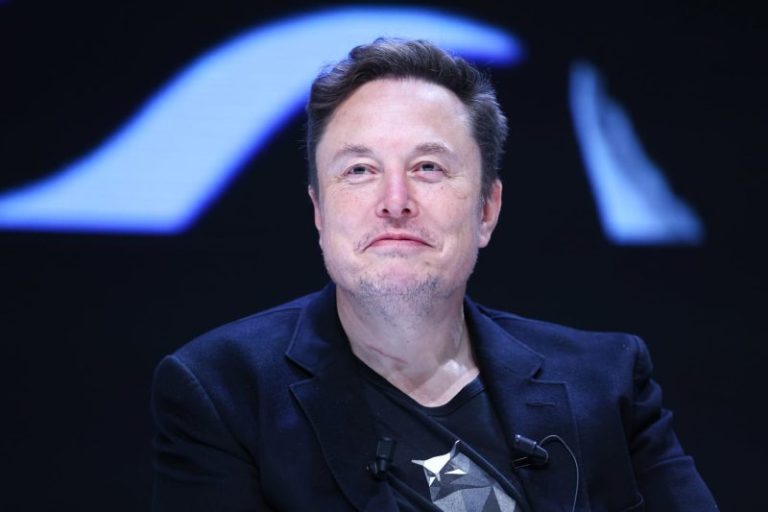
      SpaceX on Monday acquired xAI, the artificial intelligence startup that also owns the X social media platform, in a deal combining two companies owned by Elon Musk.

      Musk in a news release said that the combination would aim to pursue AI data centers in outer space.

      The deal comes on the verge of SpaceX’s highly anticipated initial public offering, which is expected to occur later this year.

      The deal creates ‘the most ambitious, vertically-integrated innovation engine on (and off) Earth, with AI, rockets, space-based internet, direct-to-mobile device communications and the world’s foremost real-time information and free speech platform,’ Musk said in a statement.

      The combined company will become the world’s most valuable private company, worth more than $1.2 trillion, Bloomberg News reported. NBC News has not been able to verify the valuation, and the companies did not respond to requests for comment.

      Musk went on to say that space would be a crucial avenue for building advanced artificial intelligence.

      ‘In the long term, space-based AI is obviously the only way to scale,’ Musk wrote. ‘The only logical solution therefore is to transport these resource-intensive efforts to a location with vast power and space.’

      Musk also offered an ambitious timeline for starting to develop AI from space. He’s failed to meet many of the previous goals he set for his companies.

      “My estimate is that within 2 to 3 years, the lowest cost way to generate AI compute will be in space,” he wrote in Monday’s news release.

      SpaceX already conducts rocket tests using reusable parts, provides cellular phone and data services to T-Mobile customers, and is working with NASA to return humans to the moon in the near future.

      Meanwhile, xAI, Musk’s bid to get in on the AI boom, has reportedly soared to a more than $200 billion valuation. Along the way, the company and its AI bot, Grok, have drawn criticism. Recently, the company limited its image generation technology after users said it was creating sexualized deepfakes. A number of state attorneys general and the European Union are investigating the company.

      Musk’s companies have often been intertwined, but Monday’s deal brings them even closer together. Another one of Musk’s companies, Tesla, has invested in xAI and uses some of its technology.

      Musk merged his social media site X with xAI in early 2025, but the tie-up between xAI and SpaceX marks the largest combination to date of Musk’s vast business projects.

      Founded in 2002, SpaceX has helped catapult Musk to the ranking of richest person in the world, with a net worth of more than $670 billion. The company has quickly become a critical supplier of satellite-based internet around the world, with more than 9,000 satellites orbiting Earth, used by both consumers and governments. SpaceX also holds multiple NASA contracts.

      This post appeared first on NBC NEWS