
Archive

January 2026

Browsing

The cobalt market entered 2025 under pressure from a prolonged supply glut, but the balance shifted sharply as the year unfolded, due almost entirely to intervention from the Democratic Republic of Congo (DRC).

After starting the year near nine year lows of US$24,343.40 per metric ton, cobalt metal prices had risen to US$53,005 by the end of December, pushed upward by supply concerns stemming from export limits in the DRC.

“The cobalt market in 2025 was characterised by a significant price recovery following the DRC banning the export of all cobalt from its borders in February,” said Aubry. “By the end of 2025, sulphate prices increased 266 percent, hydroxide increased by 328 percent and metal prices by 130 percent year-to-date.”

Q1: Cobalt moves from glut to supply shock

As mentioned, cobalt metal prices hit their weakest level since 2016 in January. Global mine output had more than doubled over five years, far outpacing demand growth from electric vehicles and other end uses.

That dynamic changed abruptly in late February, when the DRC — which supplies roughly three-quarters of the world’s cobalt — imposed a four month suspension on cobalt hydroxide exports.

The news lifted cobalt from US$24,495 at the start of the year to above US$34,000 by the end of March, with intra-month highs nearing US$36,300. The move marked the sector’s first meaningful rebound in nearly two years.

As the DRC exhibited control over cobalt supply, the market began to look to the world’s second largest cobalt-producing nation: Indonesia. Indonesia’s cobalt output is largely a by-product of its laterite nickel industry, produced through high-pressure acid leaching (HPAL) plants that process nickel-rich ores.

These facilities generate mixed hydroxide precipitate (MHP), an intermediate containing both nickel and cobalt that can be further refined into battery-grade materials. The model has enabled Indonesia to rapidly scale its cobalt supply, leveraging its dominant nickel position and integrated processing infrastructure.

Indonesia produced about 31,000 metric tons of cobalt in 2024 — roughly 10 percent of global supply — cementing its position as the world’s second largest producer behind the DRC.

Output growth is being driven by HPAL projects targeting up to 500,000 tons per annum (tpa) of mixed hydroxide precipitate, potentially yielding 50,000 tpa of cobalt, though scaling up may prove challenging.

Indonesian MHP, a lower-cost intermediate that is rich in nickel and cobalt, is increasingly viewed by Chinese refiners as a substitute for DRC-sourced cobalt hydroxide.

Q2 and Q3: A fragile equilibrium forms

The DRC’s export ban continued to underpin prices through the second quarter.

Standard-grade cobalt metal was trading near US$15 to US$16 per pound at the time, while cobalt sulfate posted even sharper gains. Despite the rally, sentiment remained cautious. Chinese refiners drew on existing inventories, and trade data showed cobalt units still flowing into China, particularly from Indonesia.

By June, prices had begun to ease as uncertainty mounted over how long the DRC would maintain controls.

Although China imported significant volumes earlier in the year, analysts warned Indonesian supply would be insufficient to fully offset reduced DRC cobalt shipments. Later that month, the DRC extended its export restrictions through September, reinforcing expectations that the market would move toward balance.

By mid-year, Chinese import data confirmed the impact — cobalt hydroxide inflows had fallen sharply, with analysts projecting constrained refinery feed into late 2025 or early 2026.

Prices stabilized in a broad US$33,000 to US$37,000 range through Q3, supported by tightening supply and diminishing inventories. Market participants increasingly viewed the DRC’s actions as a structural shift rather than a temporary correction, signaling the end of the cobalt surplus that had defined the previous two years.

By late 2025, the cobalt market had transformed from one of chronic oversupply to one approaching equilibrium — a reset driven not by demand growth, but by decisive supply-side intervention.

Q4: Cobalt quotas replace DRC ban, prices climb

After months of supply disruption, the DRC lifted its full cobalt export ban in mid-October, replacing it with a rigid quota system that will shape the market through 2026.

Under the new framework, annual DRC exports are capped at about 96,600 metric tons, roughly half of 2024 levels, with just 18,125 metric tons scheduled for shipment in Q4 2025.

This structural tightening helped sustain elevated prices that surged above US$47,000 by late October, levels not seen since early 2023, amid persistent feedstock shortages and constrained exports.

DRC quotas have provided a degree of market clarity, with major producers like CMOC Group (OTCPL:CMCLF) receiving significant allocations that underpin production plans. Despite robust output guidance, inventories outside the DRC remain tight, and market participants see continued upward price pressure as the quota system curtails supply.

“The DRC’s quota system is set to squeeze supply in the next two years — unless the country revises quotas higher,” wrote Fastmarkets’ Oliver Masson in a December market update.

“Prices are already considerably higher than they were at the beginning of the year, and they are likely to remain elevated for as long as current quota levels remain in force,’ he said. ‘Cobalt is mostly used in batteries, and the longer prices remain elevated, the more likely it is that EV manufacturers will seek to move to low-cobalt or cobalt-free chemistries where feasible. This could slow demand in the medium term.”

Cobalt price forecast for 2026

Looking ahead to 2026, analysts see the cobalt market shifting into a deficit as export caps bite and global feedstock availability shrinks. Fastmarkets projects a structural shortfall of about 10,700 metric tons against demand near 292,300 metric tons, driven by DRC quota limits and ongoing drawdowns of stocks.

Industry forecasters also anticipate that reduced shipments, combined with a stubbornly tight pipeline, will support stronger average prices next year. Some forecasts suggest cobalt could average near US$55,000 in 2026 as export quotas supplant the 2025 ban. Indonesian supply is emerging as a secondary source, with production climbing, but most analysts agree it will be insufficient to offset DRC constraints in the near term.

After a year of dramatic swings driven by supply policy in the DRC, 2026 is shaping up as the first sustained deficit environment in the cobalt market, with prices expected to remain elevated amid structural tightening.

“Prices have substantially recovered over 2025 and are expected to remain elevated in 2026 as the DRC limits exports,” said Aubry. “There is a significant potential upside risk as dwindling ex-DRC stocks present the risk of demand destruction towards the end of the year.”

Securities Disclosure: I, Georgia Williams, hold no direct investment interest in any company mentioned in this article.

This post appeared first on investingnews.com

VANCOUVER, BRITISH COLUMBIA / ACCESS Newswire / January 14, 2026 / CoTec Holdings Corp. (TSX-V:CTH)(OTCQB:CTHCF) (‘CoTec’ or the ‘Company’) is pleased to announce that the Company’s CEO, Julian Treger, will host an investor update on Friday, January 16, 2026, at 8:00 a.m. PST / 11:00 a.m. EST.

The update will highlight recent platform and strategic developments across the CoTec portfolio. Management will provide a high-level update on progress at MagIron, a CoTec investment advancing a U.S.-based iron ore and metallics strategy, as well as HyProMag USA, and discuss other key initiatives currently being advanced by the Company. The presentation will also include management’s outlook for 2026, outlining priorities, upcoming milestones, and areas of focus for the year ahead. A Q&A session will follow the presentation.

Investors who wish to attend the presentation may do so by clicking here to register.

Should the above link not work, please copy and paste the following link to your web browser: https://us06web.zoom.us/webinar/register/WN_0NBXb4IIRXOVP0d2l7j5Vg#/registration

About CoTec

CoTec Holdings Corp. (TSX-V:CTH)(OTCQB:CTHCF) is redefining the future of resource extraction and recycling. Focused on rare earth magnets and strategic materials, CoTec integrates breakthrough technologies with strategic assets to unlock secure, sustainable, and low-cost supply chains for the United States and its allies.

CoTec’s mission is clear: accelerate the energy transition while strengthening U.S. economic and national security. By investing in and deploying disruptive technologies, the Company delivers capital-efficient, scalable solutions that transform marginal assets, tailings, waste streams, and recycled products into high-value critical minerals.

From its HyProMag USA magnet recycling joint venture in Texas, to iron tailings reprocessing in Québec, to next-generation copper and iron solutions backed by global majors, CoTec is building a diversified portfolio with long-term growth, rapid cash flow potential, and high barriers to entry. The result is a differentiated platform at the intersection of technology, sustainability, and strategic materials.

For more information, please visit www.cotec.ca

For further information, please contact:
Eugene Hercun, VP Finance, +1 604 537 2413

Forward-Looking Information Cautionary Statement

Statements in this press release regarding the Company and its investments which are not historical facts are ‘forward-looking statements’ that involve risks and uncertainties, including statements relating to management’s expectations with respect to its current and potential future investments and the benefits to the Company which may be implied from such statements. Since forward-looking statements address future events and conditions, by their very nature, they involve inherent risks and uncertainties. Actual results in each case could differ materially from those currently anticipated in such statements. For further details regarding risks and uncertainties facing the Company, please refer to ‘Risk Factors’ in the Company’s filing statement dated April 6, 2022, a copy of which may be found under the Company’s SEDAR+ profile at www.sedarplus.ca

Neither TSX-V nor its Regulation Services Provider (as that term is defined in the policies of the TSX-V) accepts responsibility for the adequacy or accuracy of this news release.

SOURCE: CoTec Holdings Corp.

View the original press release on ACCESS Newswire

News Provided by ACCESS Newswire via QuoteMedia

This post appeared first on investingnews.com

The Bitcoin price is on the comeback as it breached the $96,000 mark, resuming its rally since January. With the momentum it has acquired, Bitwise CIO Matt Hougan expects the token to see a parabolic rise, given the BTC ETF continues with its current inflow. Bitcoin Price Jumps to Year High of Above $96,000 The

The post Bitcoin Price Reclaims $96K as Bitwise CIO Predicts “Parabolic” Run From BTC ETF Flows appeared first on CoinGape.

The cryptocurrency market experienced a notable surge on January 14, with a 3.33% rise in the last 24 hours. The market capitalization is now at 3.24 trillion with robust returns on various assets. Bitcoin price rallied above $95,000, eyeing $100,000 mark, whereas Ethereum price increased to $3,300 after taking a bullish turn. Dash recorded a

The post Why Is Crypto Market Up Today (Jan 14)? appeared first on CoinGape.

The meme coin market has experienced a significant rise, with a market capitalization now reaching $52 billion, marking an 8.1% increase in the past 24 hours.  The overall cryptocurrency market experienced a 4% increase that pushed the total market cap to $3.24 trillion. Dogecoin (DOGE), Shiba Inu (SHIB), and PEPE are top meme coins that

The post Top 3 Meme Coins Price Prediction: PEPE, Dogecoin, and Shiba Inu as 8% Market Boost Fuels Growth appeared first on CoinGape.

Aster DEX is a non-custodial crypto perpetual trading platform. It offers leverage trading for top crypto assets, tokenized stocks, and precious metals with up to 1001X leverage. Aster Dex runs an onchain orderbook system, offering CEX-style trading while keeping 100% of its activity on the blockchain. It is backed by Binance-owned Yzi Labs and powered

The post Aster DEX Review – Is It Safe and Legitimate? appeared first on CoinGape.

Ripple has received early approval for an Electronic Money Institution license in Luxembourg. This helps increase its presence in Europe with regard to blockchain payments. Ripple Obtains Important Regulatory Approval in Luxembourg In its press release, the company confirmed that it has received its preliminary approval in relation to EMI licensing. It was received from

The post XRP News: Ripple Secures First EMI License in Luxembourg to Boost Payments in Europe appeared first on CoinGape.

Aided by rising demand for permanent magnets, the rare earths market entered 2025 on firmer footing, with prices and investor sentiment trending higher.

That early optimism, however, was quickly overtaken by mounting geopolitical risk as US-China trade tensions returned rare earths to the center of global supply chain concerns.

Through the first quarter, uncertainty around tariffs and the prospect of tighter Chinese controls weighed heavily on downstream industries and reinforced the strategic value of rare earths.

That risk crystallized in early April, when China issued Announcement 18, a sweeping export control regime covering a range of medium and heavy rare earths — including terbium, dysprosium, samarium and yttrium — as well as related oxides, alloys, compounds and permanent magnet technologies.

Framed by Beijing as a national security and nonproliferation measure, the policy added a new layer of regulatory friction to supply chains underpinning electric vehicles, defense systems, clean energy and advanced manufacturing.

The response was swift. In Washington, the Trump administration moved to reassess US critical minerals security, singling out rare earths as a strategic vulnerability.

“An overreliance on foreign critical minerals and their derivative products could jeopardize US defense capabilities, infrastructure development, and technological innovation,” the White House said, underscoring a shift from market-driven concern to national security imperative.

For Jon Hykawy, president and chief executive at Stormcrow Capital, the Trump administration’s rare earths ambitions and its understanding of the minerals markets was the most impactful trend of 2025, commenting, “By far the biggest impact was the implication from re-elected US President Donald Trump that rare earths and other critical materials, to be found in Ukraine or Greenland or Canada or wherever, are the most bigly important things, ever.’

The seasoned market analyst also questions the administration’s broader goals.

“Critical materials are, to me, what is necessary for ensuring that important projects can be completed,’ he said.

‘But President Trump has also decided that climate change is a scam, that electrified vehicles and wind power are terrible and coal and oil are where it’s at,’ Hykawy continued.

‘In that case, whether or not Trump has even the concept of a plan regarding what a rare earth actually is, and he isn’t using ‘rare earth’ as a catch-all phrase for ‘weird metal that I don’t know how to spell,’ then rare earths or lithium are not critical materials, as far as the USA should be concerned: if you don’t need ‘em, they ain’t critical.”

China’s rare earths chokehold exposes supply chain fault lines

By mid-year, the impact of China’s controls was being felt most acutely in the automotive sector. European suppliers warned of production shutdowns as licensing delays rippled through tightly integrated supply chains.

The Asian nation controls roughly 70 percent of global rare earths mine output, as well as 85 percent of refining capacity and about 90 percent of magnet manufacturing.

That concentration left markets highly exposed when Beijing escalated restrictions again in October, expanding export controls to cover a total of 12 rare earths and associated permanent magnets.

Although some measures were later paused through November 2026, earlier dual-use restrictions stayed in place, reinforcing the perception that rare earths are now a tool of geopolitical leverage.

“At its core, China has shown a greater willingness to use its dominance in critical minerals to advance its trade and geopolitical influence, potentially causing significant disruptions to global supply chains for industries like automotive, aerospace, defense, and electronics,” states a S&P Global Energy report.

Against that backdrop, efforts to diversify supply accelerated.

In the US, government support moved from rhetoric to capital. The Department of Defense committed US$400 million to MP Materials (NYSE:MP) to expand processing at Mountain Pass and build a second domestic magnet plant, securing a US-based source of permanent magnets for defense applications.

Days later, Apple (NASDAQ:AAPL) announced a US$500 million agreement with MP to supply recycled rare earth magnets for hundreds of millions of devices starting in 2027, tying supply chain security to sustainability.

As Hykawy explained, these developments are setting the stage for ex-China supply:

“We are at the beginning of producing, processing and utilizing rare earths in a supply chain entirely outside of China. There is absolutely nothing that prevents us from building that western supply chain except time and money. Rare earth deposits of all types, including ionic clays and their relatively inexpensive production of heavy rare earths, are readily available outside of China.”

He went on to note that there has been a misconception about the impacts of rare earths production, paired with a lack of investment and expertise that has prevented a faster buildout.

“It’s a media cliché that rare earth mining and processing is somehow much more destructive to the environment than other types of mining, but that’s also just plain wrong,” Hykawy added.

“Unfortunately, building that supply chain will take money and, especially, time, because we need the people who know how to do all of this, and there is no substitute for the time required to give them their required experience.”

Rare earths supply security and growing demand

As global demand for rare earths accelerates and supply chain risks heighten, experts believe the sector’s importance on the global stage will keep intensifying.

During a Benchmark Week presentation, Michael Finch of Benchmark Mineral Intelligence explained that rare earths have “become far more strategic in nature” over recent years, with applications spanning electric vehicles, consumer electronics, wind energy, robotics and modern military systems.

While permanent magnets remain a headline driver, non-magnetic uses now account for a larger share of total demand, underscoring the material’s broad industrial importance.

Demand projections for rare earths forecast robust growth, underpinned key segment expansion.

According to Finch’s data an average 100 kW EV traction motor contains roughly five kilograms of neodymium-praseodymium and about one kilogram of dysprosium oxide, illustrating how electrification is fueling consumption.

Additionally, permanent magnet applications are projected to grow at an 8.5 percent compound annual rate through 2030, with magnetic and non-magnetic uses expected to reach parity over the next decade.

Military demand is also a significant driver.

“(There are) 418 kilograms of rare earths going into an F 35 type two fighter (jet), 2.6 metric tons going into a type 51 (naval) destroyer, and 4.6 metric tons going into a Virginia class submarine,” said Finch.

As stated, supply remains heavily concentrated in China which controls 91 percent of the overall supply chain, from mining to permanent magnets. Finch emphasized that this concentration creates a single-country risk, noting, “When a country owns so much of a supply chain, it’s easy to use it as a bargaining chip.”

The global rare earths supply chain is gradually diversifying. North America and Africa are emerging as key growth regions, with projects expected to significantly expand non-Chinese production in the coming decade.

Finch pointed to Africa, which could account for up to 7 percent of global supply after 2030, driven by low capital intensity and favorable mining costs. Despite this progress, he cautioned that complete self-sufficiency outside China remains a distant prospect, emphasizing the need for rapid investment and strategic coordination to secure supply.

Rare earths investment bolstered by government support

In addition to the Department of Defense’s MP Materials investment, the US government has established a price floor for NdPr oxide, the high-value rare earths ingredient inside permanent magnets.

During a fireside chat at Benchmark Week, Ryan Corbett, CFO of MP Materials, explained the impact of the price floor in support of the burgeoning US supply chain. He told the audience that the deal is “absolutely transformational,’ and pointed to China’s ability to control pricing by flooding or starving the market. “What good is it to invest billions of dollars if the second you turn your refinery on, prices go from US$170 to US$45?” said Corbett.

In October, the Trump administration announced another strategic investment aimed at reshoring critical supply chains through a US$1.4 billion public-private partnership with Vulcan Elements and ReElement Technologies.

Under the agreement, the Commerce Department will provide US$50 million in CHIPS Act incentives for neodymium-iron-boron magnet production in exchange for an equity stake, alongside up to US$700 million in conditional Defense Department loans to support facilities targeting up to 10,000 metric tons of annual output.

On the private investment side, Rare earths developer Pensana (LSE:PRE,OTCPL:PNSPF) secured a US$100 million strategic investment to advance its mine-to-magnet ambitions in the US, at the end of 2025.

Although the rare earths sector saw several multimillion-dollar deals in 2025, exploration capital remains scarce.

According to S&P Global’s Senior Principal Analyst, Mining Studies & Mine Economics, Paul Manalo the rare earths account for 1 percent of global exploration budgets, however, that number has improved in recent years.

“For the sixth consecutive year, budgets for rare earths were up reaching US$155 million in 2025; it’s the highest level since 2012,” Manalo said during the S&P Global Market Intelligence 2026 Corporate Exploration Strategies webinar.

Although exploration budgets are growing, the expert said 80 percent of that capital is being deployed in only four countries: Australia, Brazil, USA and Canada. “Just like in other minor metals, the juniors are the primary drivers for exploration of rare earths, with only a few majors dabbling in it,” Manalo told listeners, adding, “There are few rare earth mines outside of China, so most pending exploration is for late stage projects.”

The government funding and strategic stockpile proposal were acknowledged as a good starting point by Stormcrow Capital’s Hykawy, who also cautioned that they may not be as meaningful as markets anticipate.

“I give the efforts so far an ‘A’ for enthusiasm but a ‘C-‘ for effectiveness. From what I have seen, the powers-that-be are beavering away to create a supply chain that can provide what the world is demanding, today,” he said.

“Unfortunately, many of their efforts can’t bear fruit for 5 years or more, and none of these agencies seemed to think it worthwhile to try and evaluate what will be required in 5 or 10 years.”

More long-term foresight is needed.

“Technology giveth, but technology also taketh away, and while no one can be sure what the technology-driven need will be in 5 or 10 years, we should at least try to incorporate that into planning,” he said.

“If the wrong projects are being backed, the economics for that producer or processor in 5 or 10 years are not going to look good and money and time will have been completely wasted.”

Securities Disclosure: I, Georgia Williams, hold no direct investment interest in any company mentioned in this article.

This post appeared first on investingnews.com

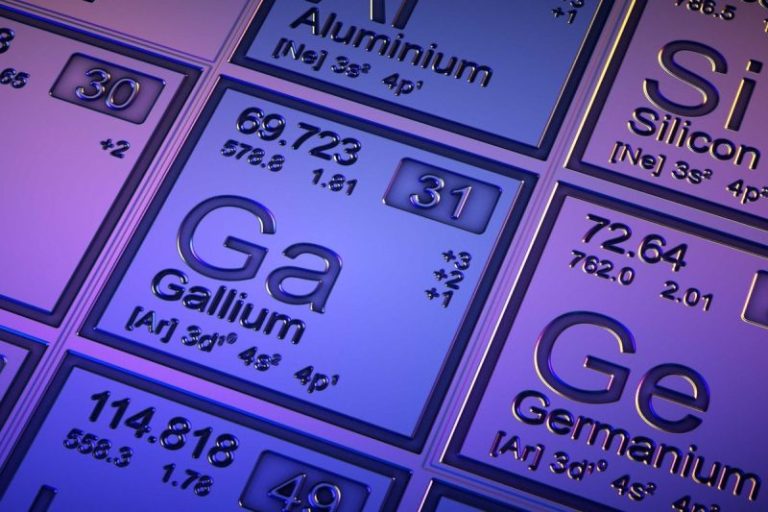
The Trump administration is considering a direct equity stake in a Louisiana-based refinery to establish what officials say would become the only large-scale producer of gallium in the US.

The Department of Defense is set to invest US$150 million in preferred equity in Atlantic Alumina, known as ATALCO, as part of a strategic partnership with an affiliate of Pinnacle Asset Management, according to Bloomberg.

The unannounced deal will fund an expansion of ATALCO’s alumina output and the construction of a new circuit to recover gallium, a critical metal used in military systems and advanced semiconductors.

Under the agreement, ATALCO will pair the Pentagon’s investment with an additional US$300 million from Pinnacle. The US government is also expected to provide additional funding within 30 days of the transaction’s closing.

“This strategic partnership is an essential step in reducing reliance on foreign nations for critical minerals,” ATALCO said.

Once fully built out, the facility is expected to produce more than 1 million metric tons of alumina annually and up to 50 metric tons of gallium per year. Gallium is typically recovered as a by-product of alumina refining, and China currently dominates both global alumina processing and gallium supply.

ATALCO has operated continuously since the late 1950s at its refinery in Gramercy, Louisiana, where it processes Jamaican bauxite into alumina, a fine white powder used in aluminum production.

After the closure of a neighboring refinery in 2020, the facility became the last alumina refinery of its kind in the country. The company says it currently supplies roughly 40 percent of domestic alumina demand.

The investment is a continuation of the Trump administration’s shift toward taking direct financial stakes in companies it views as strategically important in its effort to rebuild a domestic supply chain for rare earths and critical minerals.

Last November, the government backed a US$1.4 billion public-private partnership involving Vulcan Elements and ReElement Technologies, a subsidiary of American Resources (NASDAQ:AREC), to expand domestic rare earth magnet production.

In October, officials explored taking an equity stake in Critical Metals (NASDAQ:CRML), a US-listed company developing Greenland’s Tanbreez rare earths deposit.

Securities Disclosure: I, Giann Liguid, hold no direct investment interest in any company mentioned in this article.

This post appeared first on investingnews.com

Doug Casey of InternationalMan.com and the podcast Doug Casey’s Take shares his thoughts on gold, silver and more heading into the new year.

Casey, who is also a best-selling author, sees higher prices for both precious metals ahead.

Securities Disclosure: I, Charlotte McLeod, hold no direct investment interest in any company mentioned in this article.

This post appeared first on investingnews.com