

Archive

December 25, 2025

Browsing

The biotech sector is entering 2026 with a positive outlook, characterized by reasonable valuations, robust oncology momentum and supportive policy tailwinds. This combination is setting the stage for a continued recovery, driven in part by the integration of artificial intelligence (AI).

However, this sectoral resurgence must navigate a tug-of-war between supportive stimulus and structural risks, which have the potential to challenge the pace of recovery.

Biotech sector rebounding after US uncertainty

According to Song, biotech has rebounded since its lows in April of this year.

Company valuations are trading at a 15 percent discount to broader markets on forward price-to-earnings, with secular demand intact for oncology, obesity and chronic diseases. In Song’s view, the biotech industry’s rebound stems from reduced uncertainty under the administration of US President Donald Trump.

Song added that valuations across healthcare are reasonable, noting rotational flows from cooling AI hype.

“I can’t deny that there have been some rotational effects that not just biotech has benefited (from), but healthcare in general,’ he commented. “While AI is an important driver in healthcare, to our view, it certainly is not priced in to the largest extent in many pockets of healthcare.”

Key biotech sector catalysts in 2026

Song sees healthcare’s recovery extending into 2026, with oncology remaining the primary growth engine.

He characterized the current sector resurgence as a durable structural shift being fueled by key developments that present tangible investment opportunities, including anticipated positive clinical trial outcomes, such as those for Revolution Medicines’ (NASDAQ:RVMD) pancreatic cancer drug.

“They have a lead drug that blocks an important pathway called RAS … and they could have a potential breakthrough in pancreatic cancer. They’re running a Phase III trial to demonstrate a potential survival benefit. There could be meaningful progress there,” Song noted. A data readout is expected next year.

Outside oncology, Song flagged high-profile biotech catalysts that could broaden the sector’s 2026 rally.

“Non-peptide oral GLP-1s … are clearly going to be an important data set readout and launch that could occur next year,” he explained, citing Eli Lilly’s (NYSE:LLY) orforglipron, a daily pill that hit Phase III success for type 2 diabetes and obesity in 2025. Approval is expected in 2026, and he believes it could be a potential game changer in obesity and chronic disease treatments, an area dominated by biotech innovators.

Song also sees validation ahead for platform technologies.

A dual-track recovery for biotech

While macro analysts see a broad cyclical recovery in 2026, Song predicts that the market will be defined by a dual-track recovery: a diagnostics-led initial public offering (IPO) surge, and a biopharma M&A environment focused on companies with the clinical validation required to alter the current standard of care.

Renaissance Capital predicts a faster pace for biotech IPOs, with a strong pipeline of companies such as Aktis Oncology, a radiopharma diagnostics firm targeting solid tumors, ready to list for US$100 million.

Additionally, AlphaSense forecasts steady M&A flow as companies rebuild their pipelines in the new year, a trend that Song sees as a structural necessity rather than a simple trend. “It’s an important pillar where Big Pharma needs to replenish their pipelines, and they can’t all do it internally,” he explained.

Consequently, he believes the primary “hunting ground” for these deals is mid-cap territory, where acquiring one or two proven drugs can effectively move the needle for a large pharmaceutical giant.

AI in the biotech sector

Song maintained that AI has not reached full valuation in the sector, and its role is expected to grow, with significant future productivity gains predicted in biopharma, drug discovery, clinical development and healthcare delivery.

“We’ve done some preliminary work that that that suggests there could be … productivity gains in areas like biopharmaceuticals and drug discovery and clinical development,” Song explained, adding that these are long-term projections. He sees a more immediate economic impact in how care is managed.

“Since healthcare is a large part of the US and global economy, and growing quickly in terms of healthcare costs, there are also opportunities for efficiency gains, which could lead to margin and consumer gains,” he noted. This revolution in delivery is already a key focus for his firm’s Tema Oncology ETF (NASDAQ:CANC).

However, life science market analyst Anastasia Bystritskaya warned that valuation and productivity are not synonymous, as high-performing models do not automatically become revenue-producing products. For investors, the real inflection point is operational integration rather than operating as a standalone prototype.

Drive for efficiency is expected to take a practical form in 2026 through what Sergey Jakimov, managing partner at longevity and biotech venture capital firm LongeVC, described as the “doctor in your hand.”

This AI companion manages routine, low-complexity tasks between clinic visits.

LongeVC anticipates that this shift to a regulated digital workflow will allow AI to identify meaningful clinical signals continuously without overburdening primary care teams.

This democratization of discovery creates a new competitive landscape for the hunting ground Song described; if AI-enabled teams can dissect complex pathways without a billion-dollar balance sheet, the traditional R&D model of Big Pharma faces a permanent disruption. In this new era, the innovation gap could be filled by agile players who use technology to act with the scale of a giant, but the speed of a startup.

Investor takeaway

Despite sector momentum, headwinds remain, particularly regarding the stability of clinical research funding.

A November report in JAMA Internal Medicine reveals that 383 clinical trials recently had their grants terminated, disrupting progress for over 74,000 participants. Dr. Gary K. Zammit, founder of Clinilabs, warned these reductions in National Institutes of Health funding risk slowing future commercial development of innovative therapies.

Macroeconomic headwinds, including rising tariffs and early labor market weakness, also present a material challenge.

Ultimately, the 2026 biotech outlook balances promising catalysts with the need for strategic capital deployment and a focus on clinically validated platform technologies, ensuring a durable expansion for the sector.

Securities Disclosure: I, Meagen Seatter, hold no direct investment interest in any company mentioned in this article.
This post appeared first on investingnews.com

The holiday season brings more than festive cheer, as for investors, it may signal the start of the so-called Santa Claus rally.

The Santa Claus rally is a period between the final trading days of December and the first days of January when stocks tend to climb. While this seasonal uptick isn’t guaranteed, historical data shows that markets rise more often than not during this window, driven by investor optimism, low trading volumes and year-end portfolio adjustments.

Historically, the last five trading days of December and the first two of January have been a period of above-average stock gains, offering a short, sharp rally for markets heading into the new year.

According to the Stock Trader’s Almanac, the Santa Claus rally has delivered an average gain of 1.3 percent for the S&P 500 (INDEXSP:.INX) since 1950. The phenomenon was first documented in 1972 by Yale Hirsch, founder of the Almanac, and continues to shape investor expectations today.

As for whether 2025 will deliver a Santa Claus rally to close out the year, after a choppy first half for December, markets have shown signs that a late-year recovery is possible.

When does the Santa Claus rally start?

The Santa Claus rally typically occurs over the final five trading days of December and the first two trading days of January. For 2025, the rally window begins on Wednesday, December 24, and runs through Monday, January 5, if historical patterns hold.

This narrow window often yields modest, yet consistent, returns for investors who time the market correctly.

While the rally’s timeframe is traditionally short, its effects can ripple through the market into early January. Essentially, a strong performance during this period can set the tone for January.

However, the exact timing of the Santa Claus rally can vary. Some analysts suggest that the rally has started earlier in recent years as investors attempt to front run the effect by increasing their positions in mid-December. This shift may blur the lines between the Santa Claus rally and broader December market upswings.

Will 2025 deliver a Santa Claus Rally?

This year, the S&P 500 fell during the middle of the month following a cooler-than-expected, albeit controversial, inflation report, which raised hopes for additional interest-rate cuts next year.

Despite this downturn, analysts note that a weak start to December has often failed to derail Santa’s run. Since 1950, the S&P 500 finished the Santa Claus rally period higher in 77 percent of years, even after early-month declines. By the end of the week, the index had already regained some ground, and it continued higher in the days leading up to Christmas.

“Barring any major shocks, it will be hard to fight the overwhelmingly positive seasonal period we are entering and the cleaner positioning set-up,” Goldman Sachs’ (NYSE:GS) trading desk team wrote in a note to clients, as reported by Bloomberg. ‘While we don’t necessarily see a dramatic rally, we do think there is room to go up from here into year end.”

Jeffrey Hirsch, editor-in-chief of the Stock Trader’s Almanac and Yale Hirsch’s son, also weighed in on the markets.

“It looks like (the Santa Claus rally) is set up and we can make another high by the end of the year,” he told MarketWatch. Hirsch cited cooler inflation readings and slower job growth in November, which may give the Federal Reserve room to cut interest rates in 2026.

It remains to be seen whether these predictions will come true, or if the market will be weighed down by factors including recent volatility in technology and artificial-intelligence-linked stocks.

Is the Santa Claus rally reliable?

Despite skepticism in some quarters, historical data supports the existence of the Santa Claus rally, and it is well documented.

Historically, the Santa Claus rally has been a relatively consistent period of gains. That said, historical patterns do not guarantee results, and not every year delivers the expected results. The S&P 500 lost about half a percentage point during the Santa rally period in 2024, and consecutive losses are rare but possible.

Columnist Mark Hulbert has expressed skepticism about the event in the past, noting that there is no definitive evidence that the market consistently outperforms during this period.

“An analysis of the past century reveals that the stock market in the weeks prior to Christmas is no more likely to rally than at other times of the year. (I suggest investors) ignore any arguments based on an alleged Santa Claus Rally,” Hulbert warned in an opinion piece posted on MarketWatch in 2018.

In 2019, for example, the market experienced volatility in December, defying the usual pattern.

In a December 2025 interview with CNBC, Jeffrey Hirsch cautioned that failure to rally is not an immediate bear-market signal, but rather “a flag to start looking at the other data — whether it’s seasonal indicators or other fundamental or technical measures.”

Despite the varying takes, many investors view the rally as a psychological phenomenon — one that influences market sentiment even if the returns are marginal.

Strategies for the Santa Claus rally

Now that the Santa Claus rally seems to be underway, investors interested in joining in have a variety of options, including domestic markets, international diversification or targeted sector plays such as mega-cap tech stocks.

As always, consulting with a financial advisor and conducting thorough research remains essential. While the Santa Claus rally offers potential rewards, market conditions can shift quickly, making flexibility and prudence key to success.

Securities Disclosure: I, Giann Liguid, hold no direct investment interest in any company mentioned in this article.
This post appeared first on investingnews.com

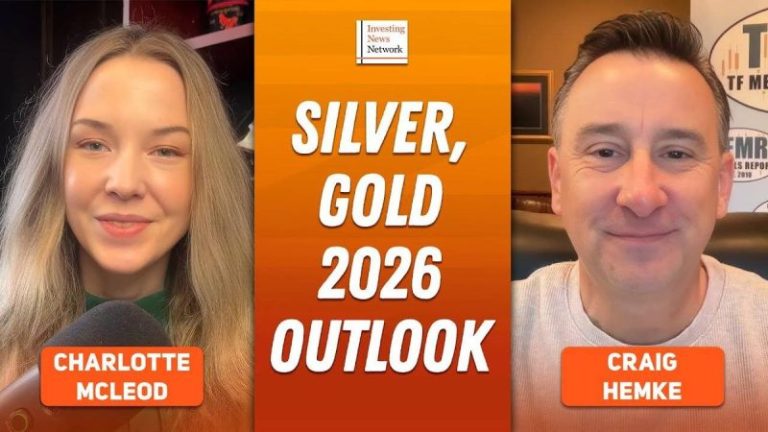
Craig Hemke, publisher of TFMetalsReport.com, shares his thoughts on the gold and silver markets heading into 2026, outlining why he remains bullish.

‘Just keep adding some — it’s your protection against the madness. It’ll get you through the storm,’ he said. ‘It preserves your net worth from the destruction of these bankers and politicians.’

Securities Disclosure: I, Charlotte McLeod, hold no direct investment interest in any company mentioned in this article.
This post appeared first on investingnews.com

Altius Minerals (TSX:ALS,OTCQX:ATUSF) is making a bet on a lithium market recovery, agreeing to acquire Lithium Royalty (TSX:LIRC) in a C$520 million deal that will expand its exposure to battery metals.

Under a definitive agreement announced by the two companies on Monday (December 22), Altius plans to purchase all of the issued common and convertible common shares of Lithium Royalty for C$9.50 each.

The amount will be paid as either C$9.50 in cash or 0.24 of a common Altius share, according to shareholders’ election.

For Altius, the acquisition will allow it to bring a portfolio of 37 lithium royalties into its fold. None of them involve streams, and they span projects from production through early exploration.

Four of the royalties are tied to producing assets, three of which were commissioned in 2025 and are currently ramping up or expanding. Another 12 projects are in advanced stages with completed economic studies, while three to five additional assets are targeting startup between 2026 and 2030.

The company said the portfolio is geographically concentrated in lower-risk jurisdictions, with most assets located in Canada, Australia and South America, and diversified across both brine-based and hard-rock lithium production.

At the current spot price, Altius expects the acquired royalties to contribute between US$29 million and US$43.7 million in annual revenue by the end of the decade. Lithium carbonate equivalent prices fell to multi-year lows in 2025, holding below US$9,000 per metric ton for most of the year, even as demand continues to expand beyond electric vehicles.

Altius said global lithium demand is expected to exceed 1.5 million metric tons of lithium carbonate equivalent in 2025, with supply deficits potentially re-emerging as early as 2026 after years of oversupply.

Altius Chief Executive Brian Dalton said lithium has “emerged as a mainstream scale mined commodity,” and described the acquired portfolio as featuring “very long resource lives,” strong cost positioning and low jurisdictional risk.

A special shareholders’ meeting is scheduled to happen no later than March 10, 2026.

If approved, the deal is expected to close in the first quarter of 2026, after which Lithium Royalty shares will be delisted and the company will cease to be a reporting issuer in Canada.

Securities Disclosure: I, Giann Liguid, hold no direct investment interest in any company mentioned in this article.

This post appeared first on investingnews.com

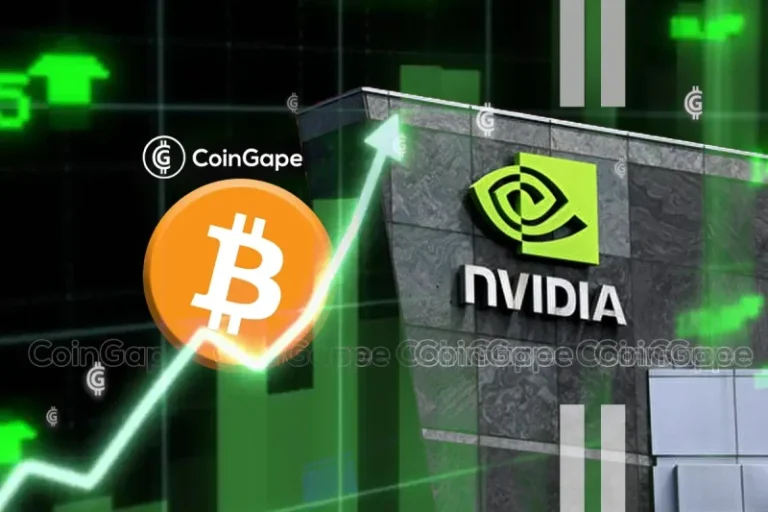
Bitcoin and AI coins surged today following news that Nvidia has signed a $20 billion artificial intelligence (AI) inference technology deal with Groq. The partnership is set to accelerate AI adoption and boost AI-crypto convergence. Nvidia Enters $20 Billion Deal with AI Inference Chip Startup Groq Nvidia signed a non-exclusive licensing agreement with Groq for

The post Bitcoin, AI Coins Bounce as Nvidia Signs $20B AI Inference Deal with Groq appeared first on CoinGape.

Spot Bitcoin ETFs in the United States saw net outflows of $175 million, extending the outflow streak amid thin liquidity during the holiday season. The outflows come as investors brace for Friday’s $23 billion BTC options expiry and bearish price predictions from experts. Spot Bitcoin ETFs Outflow Streak Signals Bearish Institutional Interest According to Farside

The post Spot Bitcoin ETFs Bleed $175M as Analysts Predict BTC Price Crash to $40K appeared first on CoinGape.

The crypto market is abuzz with another major Bitcoin move, with a dormant whale awakening after eight years. The latest report reveals that a sleeping Bitcoin whale has resurfaced, depositing 400 BTC into OKX. This gigantic move has netted him a profit of $30.4 million. Significantly, this development is part of a larger trend of

The post Dormant Bitcoin Whale Awakens with $30M Profit appeared first on CoinGape.

Indian billionaire Nikhil Kamath has revealed in a conversation with CoinDCX CEO Sumit Gupta that he has never owned Bitcoin. Despite engaging with high-profile global business leaders and prominent blockchain figures, Kamath admits that he is less familiar with Bitcoin and cryptocurrencies. He added that he is still learning about the space and plans to

The post Crypto India: Billionaire Nikhil Kamath Reveals He Holds Zero Bitcoin, Plans to Explore BTC in 2026 appeared first on CoinGape.

  The crypto market showed signs of recovery on Christmas Day, gaining 0.67% in the last 24 hours. This rebound contributed to a weekly rise of 1.46%, pushing the total market capitalization to $2.95 trillion.  Market participants are closely watching signs of a potential Santa Rally after weeks of sideways movement. Bitcoin (BTC) hovered above

The post Crypto Market Rebounds: Are Bulls Positioning for a Santa Rally? appeared first on CoinGape.